
What rainfall contributes to our lives?
Have you imagined life without rain? Certainly not! Rain and snow are parts of a larger process called the hydrologic cycle, which transports water from the ocean to land and back again, hence rainfall is one of the most pertinent sources of water. 97 per cent of Earth’s water is saline seawater which is inadequate to most land-dwelling plants and animals. That’s why rain and snow are crucial to life on Earth. Precipitation supports life on land with salt-free water. A good balance of rain and proper irrigation can lead to faster-growing plants, which can cut down on germination time and the length between seeding and harvest. Heavy rainfall can lead to numerous hazards, for example, flooding, including risk to human life, damage to buildings and infrastructure, and loss of crops and livestock. landslides, which can threaten human life, disrupt transport and communications and cause damage to buildings and infrastructure. Since direct monitoring of rainfall has many limitations because of the limited availability of rainfall data, an indirect way of measuring rainfall is by measuring soil moisture. Soil moisture increases with an increase in precipitation and hence monitoring and analyzing the same can be beneficial in identifying the rainfall pattern. Satyukt Analytics Pvt Ltd, expertise in microwave remote sensing is capable of monitoring soil moisture data at fine-scale under all weather conditions.
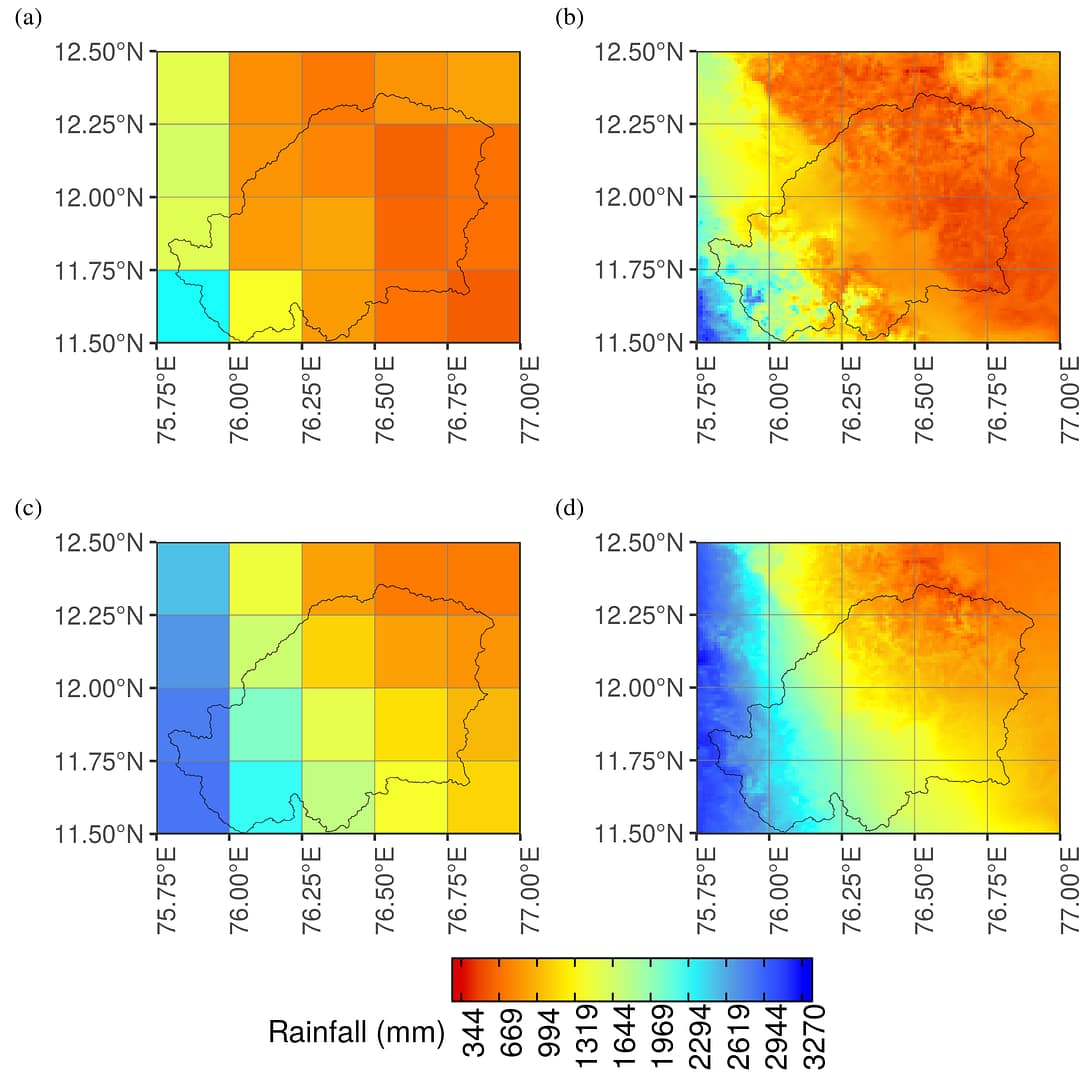
Here is an image of Chamrajanagar district in Karnataka, the data is collected from respective sources fig (a),(c) IMD and fig (b)(d) The Tropical Rainfall Measuring Mission (TRMM) depicting the rainfall situation. As it can be inferred from the figure that the rainfall for the period under analysis shows results for fewer parts of the district, other parts have received considerably lower rainfall denoted by the colour yellow and red respectively.