Analyse NDVI with Macro sensing portal
Analysing NDVI with Macro sensing portal
Satyukt Analytics has developed a unique portal for studying and analysing various crop parameters in a single web application. Here, we are describing how the Normal Difference Vegetation Index (NDVI) helps to analyse the crop growth pattern through our macro sensing portal.
We often come across the term NDVI (Normalized Difference Vegetation Index) when investigating crop health, crop yield and determining crop harvesting period. Normalized difference vegetative index is a measure of the health of crops by using remote sensing technique. The value of NDVI ranges from -1 to +1 were the value.
The values from 0.2 to 0.9 correspond to varying health of plants. For further reading regarding NDVI refer to https://satyukt.com/what-is-ndvi-and-how-can-it-be-used-for-better-agricultural-management/
Accessing and analysing the data:
The procedures followed in this portal are briefly explained one by one.
Step 1: Log in to the application using the link Macro by inserting the right credentials received from Satyukt. Once you are in the application, select crop growth from the available field options.

Step 2: After selecting the Crop growth option you’ll be provided with a number of available products that can be analysed over time.

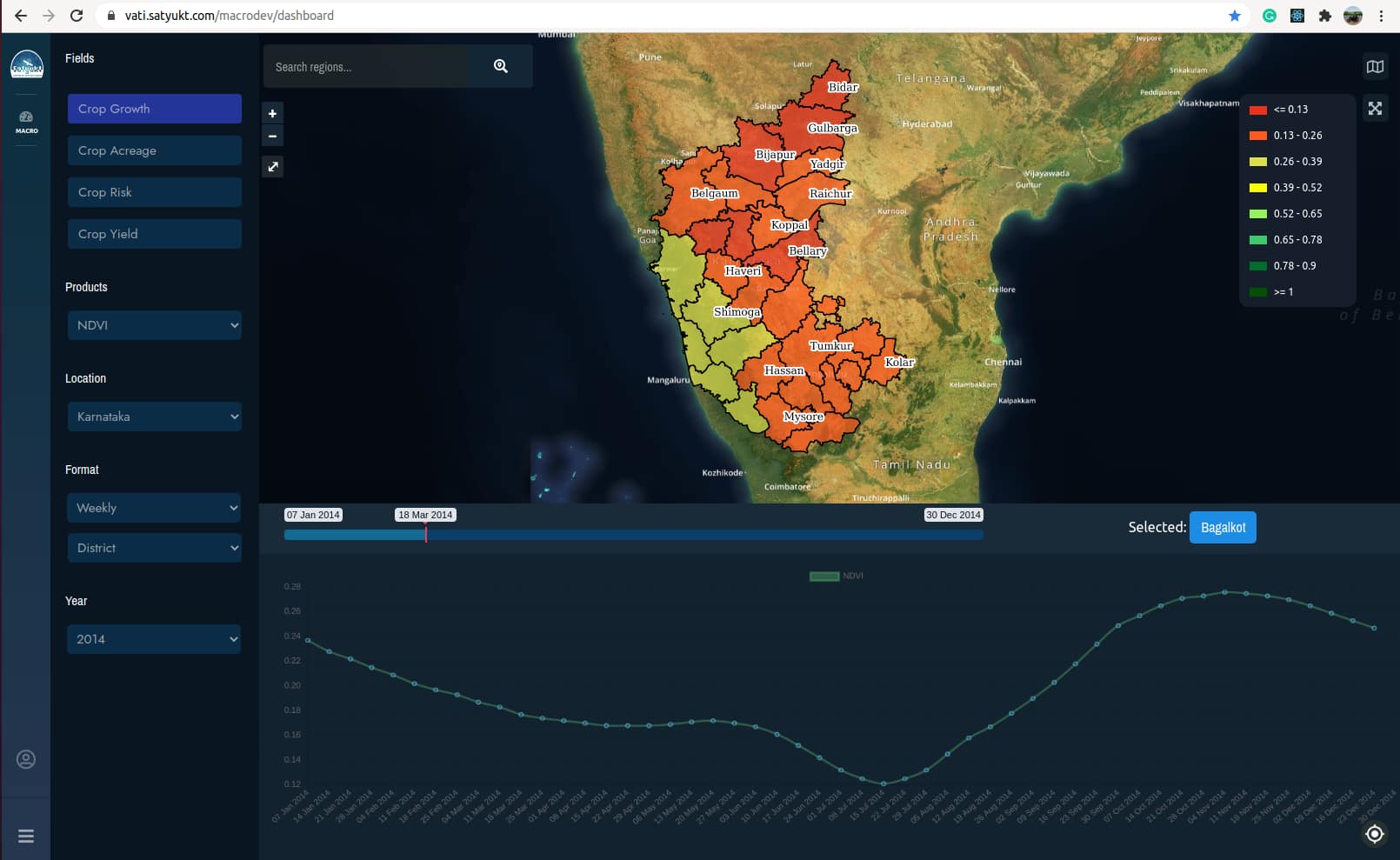
Choose NDVI from the available products and select a location to continue. All of these locations have data in various formats. For example, we have data in the district level, village level as well as seasonal formats. So, for the purpose of the demo here we select Karnataka and display the district level NDVI data.

Step 3: Until now we have selected a product, location and the available format. Further, we can move to the final step of selecting a year. Here at satyukt analytics, we provide data on various crop parameters on a current and historical basis.
So as you can see below we have displayed 2014’s district-level NDVI data on the portal. Also, we have a slider that can be adjusted to various dates of the selected year. This will help us to understand the trend of NDVI over time.