
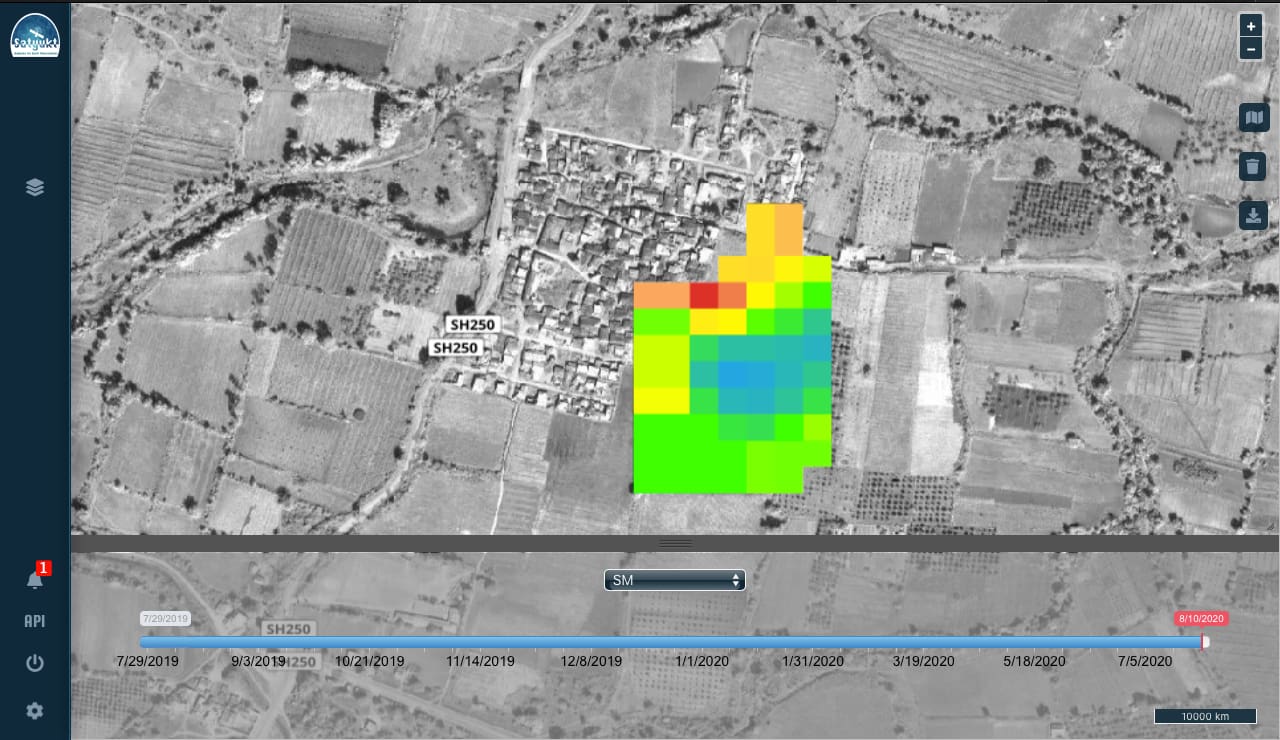
Irrigation scheduling based on soil moisture
Soil moisture is defined as the water held in the pores of soil and this forms the water reserve available to quench the crop’s water requirement. Rainfall being the primary source of water, fills up the soil reserve which can extend from half meter to one meter in depth from surface or even deeper in some places. Based on the type of soil in the field there will be changes in the amount of water held by the soil. Clayey soils can hold more water when compared to sandy or loamy soils. Highest amount of water that a soil can hold after draining excess water is defined as field capacity and lowest is defined as wilting point. Difference between field capacity and wilting point gives the total available water for the plants or crops to use. When this available water reaches < 50 % the crop is said to be under stress.

So, for the crops to grow at their optimum rate we should ensure that the available water content is close to its field capacity. Under low rainfall conditions this available water can be replenished by irrigating the farm. Farmers usually practice irrigation in low rainfall conditions and if over irrigated the water is lost in the form of evapotranspiration and drainage. Under irrigation causes low yield which is why irrigation scheduling becomes very important. Monitoring soil moisture is the best way to know how wet or dry the soil is and is a very good way to decide whether irrigation is required or not. These decisions taken related to irrigation scheduling are dependent on the available soil moisture and to get accurate estimates of irrigation, real time soil moisture data is required.
Satyukt analytics provides near real time soil moisture data at high resolution developed inhouse which is apt for this purpose. The surface soil moisture shows the wetting front which moves down water through the root zone. Crop absorbs water from the root zone in different quantities depending on the crop growth stage. At Satyukt analytics along with soil moisture data we also incorporate vegetative indices like Normalized Difference Vegetative Index (NDVI) / Enhanced Vegetative Index (EVI) data which measures crop growth stage during estimation of irrigation scheduling. Thus, taking multi satellite data Satyukt analytics aims to achieve accurate irrigation scheduling for marginal and small farmers to increase their crop productivity and reduce water loss.
Benefits of irrigation scheduling include,
- Optimised water usage.
- Identify correctly water-stressed crops/areas.
- Monitor agricultural drought in near real time
- Reduction of water loss
- Improvement in crop water productivity


Has one comment to “Irrigation scheduling based on soil moisture”
Shadman Veysi - September 28, 2020
Hi
I saw your site, is it possible for you that get us your irrigation scheduling for area?
in other words how I can get your information about irrigation scheduling using remote sensing?