
Overcoming the shortcomings of crop cutting experiment in crop insurance
Agricultural production is subjected to many uncertainties. Hazards and unforeseen extreme climatic events increase the risk of agriculture production. Many risks directly affect farmers’ production decisions and welfare. Being an agrarian country, 48.9% of the Indian population directly or indirectly depends on agriculture (Economic Survey 2014-15)1. A total of 12,602 farming sector persons (8,007 farmers/cultivators; 4,595 agricultural laborers) has committed suicides during 2015, accounting for 9.4% of total suicides victims (1,33,623) in the country (National Crime Records Bureau statistics, 2015)2.
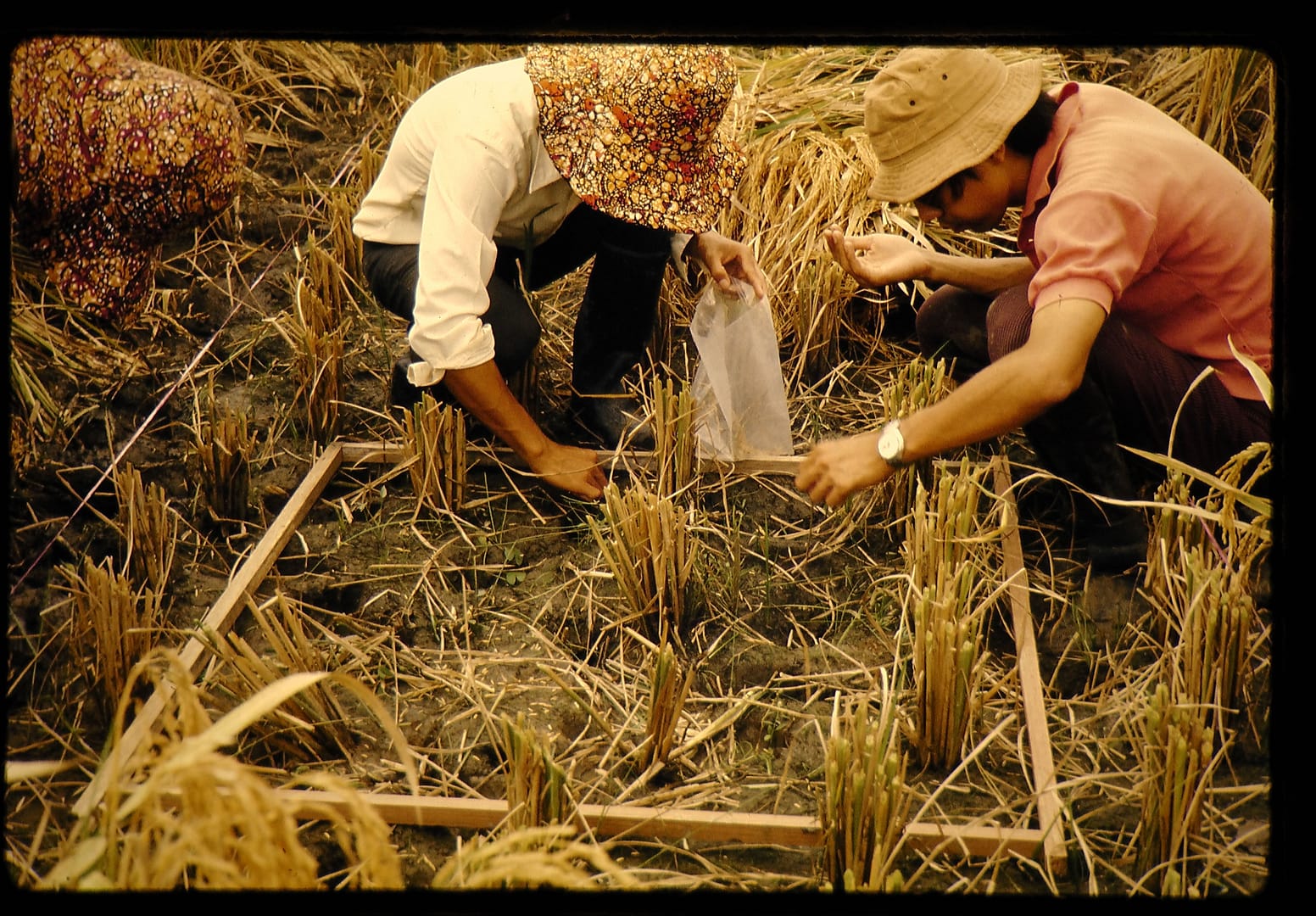
Many government and non-governmental agencies have been trying to lessen the financial loss of farmers due to these unforeseen circumstances. Pradhan Mantri Fasal Bima Yojana (PMFBY) is one of the initiatives by the Indian government. The insurance scheme was launched in 2016 with an objective to provide insurance protection to farmers against crop losses. The scheme was launched to protect the farmers from the risks involved in the production and to encourage them for greater investment in crops. However, in Practice, Insurance companies are benefitting more than farmers3. This is mainly because of the method adopted to quantify yield and damage occurred. In India, the crop numbers are computed on the basis of enumeration while the crop yield is estimated on the basis of sample survey approach known as crop cutting survey. Crop cutting method is performed in the field by marking a specific area in the field, harvest the crop in the area and weigh the produce. Every year 20 % districts are selected for these experiments 4. Hence this experiment would not account for the spatial variation of yield due to variation in chemical and physical properties of soil which may be prominent within a field itself. Also the results CCE experiments are not recorded in a systematic way5. Proper functioning of this scheme(PMFBY) can be ensured by estimating the spatiotemporal variation of yield and crop acreage. Accomplishing these steps manually is time taking and tedious and may lead to delays in settlements 6.
With the advancements in microwave remote sensing, near real-time monitoring of crop health, crop yield etc along with the loss and risk involved in agriculture production is possible with much ease. Satyukt analytics, an expert in remote sensing is capable of monitoring crop health and other parameters responsible for the spatial variation of crop yield.
- India (2015). Economic Survey – 2015. The Government of India, Ministry of Finance
- National Crime Reports Bureau, ADSI Report Annual – 2015 Government of India. Retrieved from http://ncrb.nic.in/StatPublications/ADSI/ADSI2015/chapter A%20suicides%20in%20farming%20sector.pdf
- https://www.newsclick.in/pmfby-insurance-companies-make-super-profits-farmers-suffer
- http://www.iasri.res.in/ebook/TEFCPI_sampling/DEMONSTRATION%20OF%20CROP%20CUTTING%20EXPERIMENT%20ON%20A%20FARMER%E2%80%99S%20FIELD.pdf
- https://www.thehindubusinessline.com/economy/agri-business/flawed-yield-data-cost-parbhani-farmers-crop-cover/article26314427.ece
- https://www.downtoearth.org.in/news/agriculture/pmfby-needs-urgent-repair-government-study-62046