
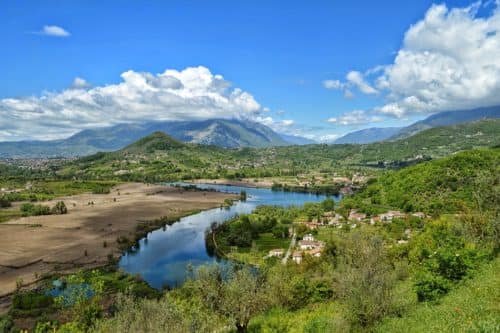
Estimation of water spread area
Problem:
Surface water bodies in India are facing a reduction in volume due to sedimentation, infiltration, and evaporation. These surface water bodies are the main source for irrigation in India 1. The information about the water spread area and the volume of water stored will be useful to find the availability of water resources for irrigation.
Challenges:
The traditional way of estimating water spread area is using field survey, which is expensive and time-consuming. This issue can be solved using remote sensing where the satellite images are used to estimate the water spread area.
The optical sensors cannot penetrate through the cloud and it relays upon the sun’s illumination to create brightness this shows that optical sensors depend upon the time of the day.
Solution:
Microwave sensors have its own illumination in the form of radio waves transmitted by an antenna, so it can be used at any time of day and night. The microwave sensors have a longer wavelength which can easily penetrate through the cloud. The C-SAR sensor is capable of obtaining night images and detecting small movement in ground.
Satyukt’s proprietary algorithms based on machine learning techniques can detect water bodies with optimal accuracy. The classification models are trained with a considerable amount of data and predictions are made. For our problem, required optimization technique is applied and better results are obtained.