
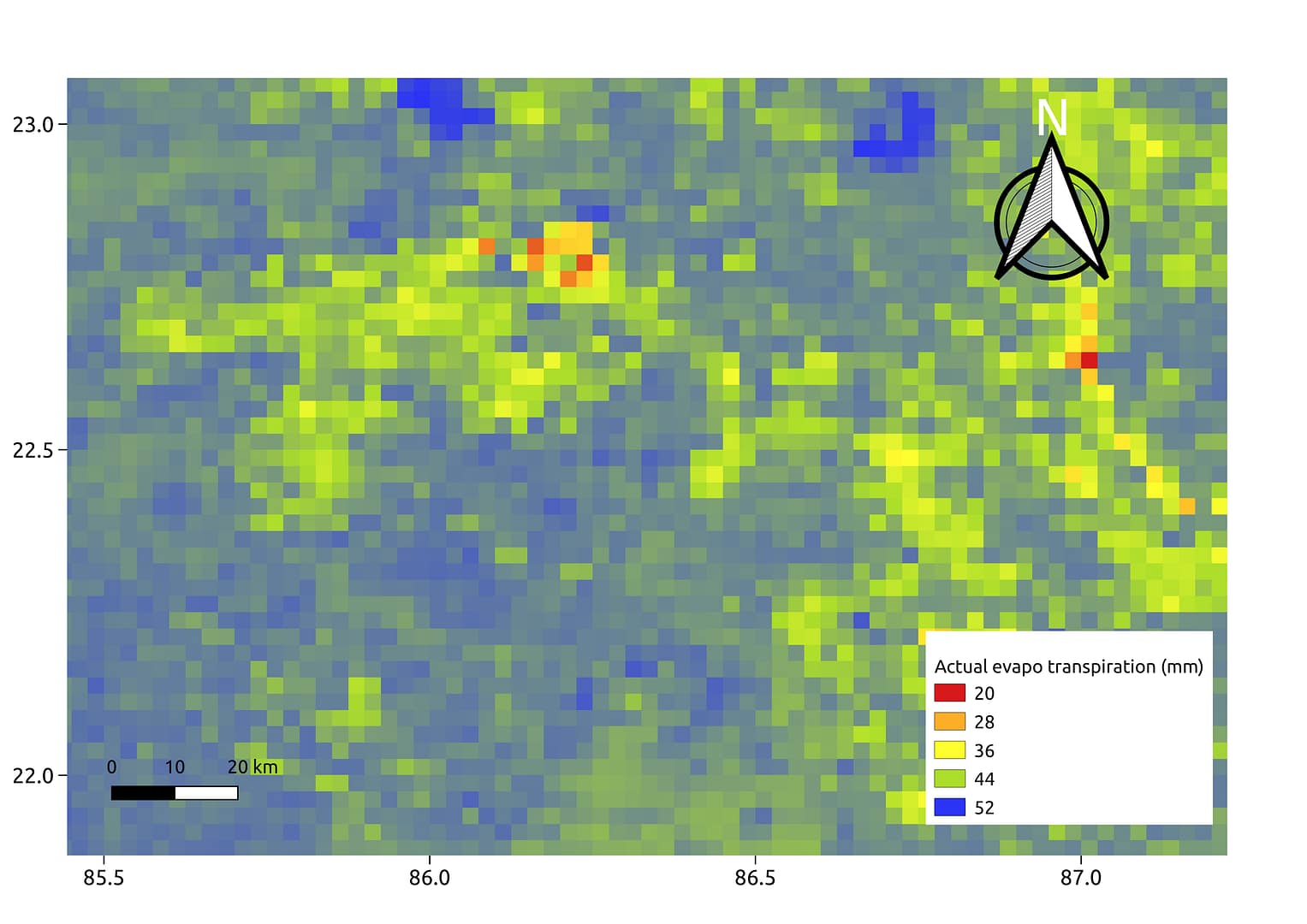
Evapotranspiration (ET) is one of the ways in which land and atmosphere interact with each other. It is the collective process of evaporation from the soil and transpiration from plants. Estimating evapotranspiration loss and crop-water requirement can be beneficial in identifying the loss and can hence help in reducing irrigation loss. With the recent...

Evapotranspiration is the process by which water is transferred from the land to the atmosphere by evaporation from the soil and other surfaces and by transpiration from plants. Estimating evapotranspiration loss and crop-water requirement can be beneficial in identifying the loss and can hence help in precision irrigation. With the recent advancements in remote...

India has witnessed many natural disasters like floods, landslides, cyclones, forest fires, earthquakes, drought, etc. To comprehend risks due to such disasters, it is necessary to integrate satellite and field-based observations and to work towards risk reduction principles. Satellites provide synoptic observations of the natural disasters at regular intervals that helps in better gearing...
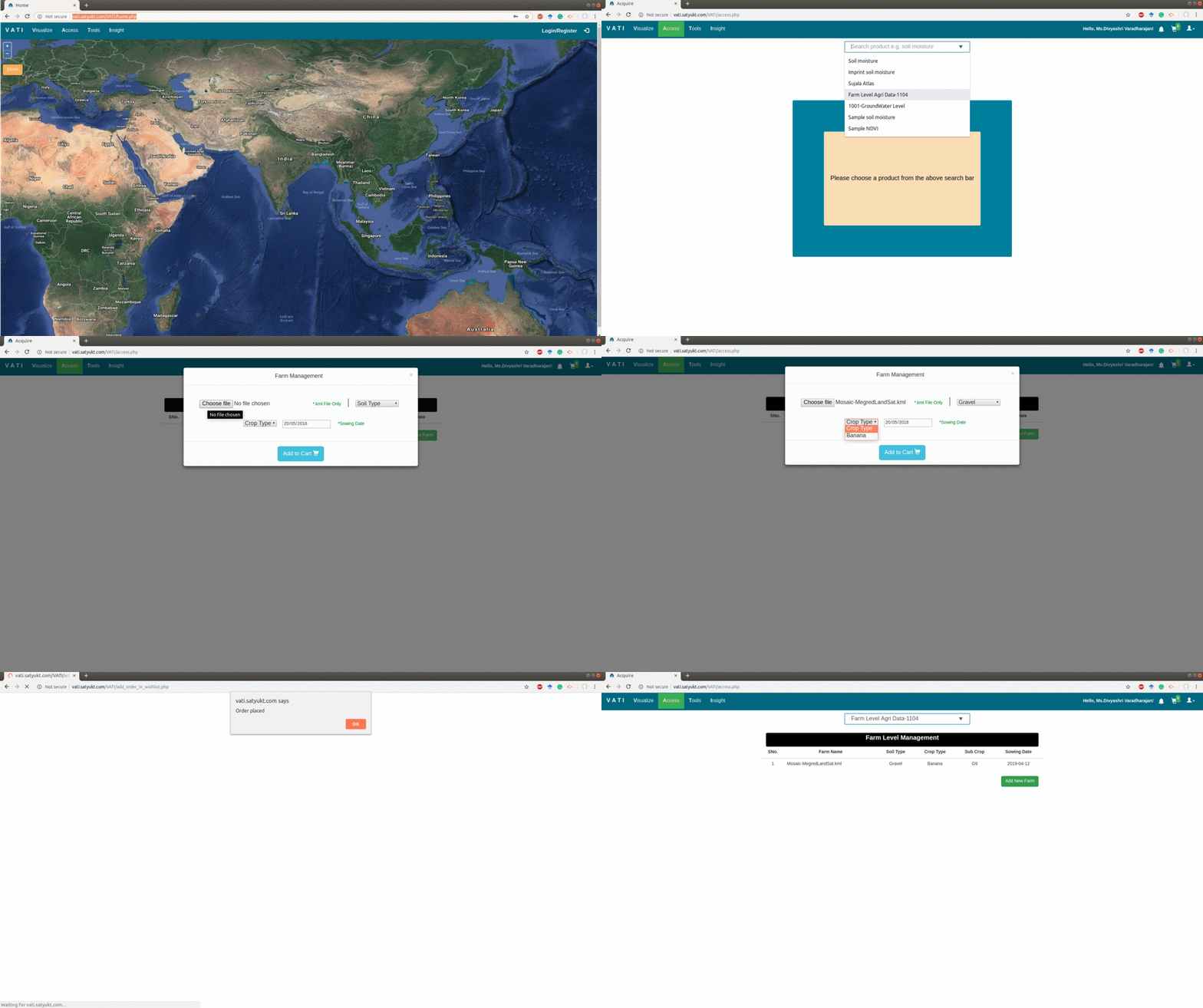
First published on October 11, 2018 Many times, the spatiotemporal variation of yield is observed in the same agriculture land because of the variation in soil structure and properties. The land-atmosphere interactions responsible for these variations can be modeled and analyzed to predict crop-water requirement, crop health and agricultural yield. The underlying parameters(agrohydrological parameters)...

First published on November 15, 2018 Crop health is dependent on Agro-hydrological factors such as soil moisture, soil type, Rainfall, evapotranspiration etc. With the emergence of satellite sensors, these parameters that influence the health of the crops can be monitored and analyzed in near real time. Detecting how these parameters vary over time helps...

According to reports by IMD, Bihar has been witnessing deficiency of rainfall from the past seven years with an increasing number of dry days. . The abnormal pattern of rainfall may affect the agrarian economy of the state adversely as agriculture generates nearly 24.84% of the State Domestic Product. As water remains one of...

Madhya Pradesh, a state with the agrarian economy is enriched with black cotton soil and hence forms the ideal land for agriculture. 80% of the state depends on agriculture. Monitoring soil moisture is important as mostly rain-fed agriculture is practiced throughout the state. The above soil moisture map has been prepared by Satyukt Analytics...

Rain has a dramatic effect on agriculture as it forms one of the effective ways of watering in many parts of the country. While a regular rain pattern is vital for crop health, too much or too little rainfall can prove harmful to crops. Analyzing the formation of rain will help in reviving agricultural...

Carbon is significant to soil capacity and productivity and is one of the decisive factors of soil health. Climate change alters the land carbon cycle and changes the atmospheric temperature. An increase in temperature will extend the growing seasons and humidity. Both factors have led to some additional plant growth. However, warmer temperatures also...

First published on October 27, 2018 Rajasthan with 79 (Out of these, 57 minerals are being currently mined) different types of major and minor minerals is a leading producer of Zinc, Feldspar, Wollastonite, silver, Rock phosphate, Gypsum, Red ochre. While industrial mining has significant financial importance and usually follows legal procedures for mining exploitation...