
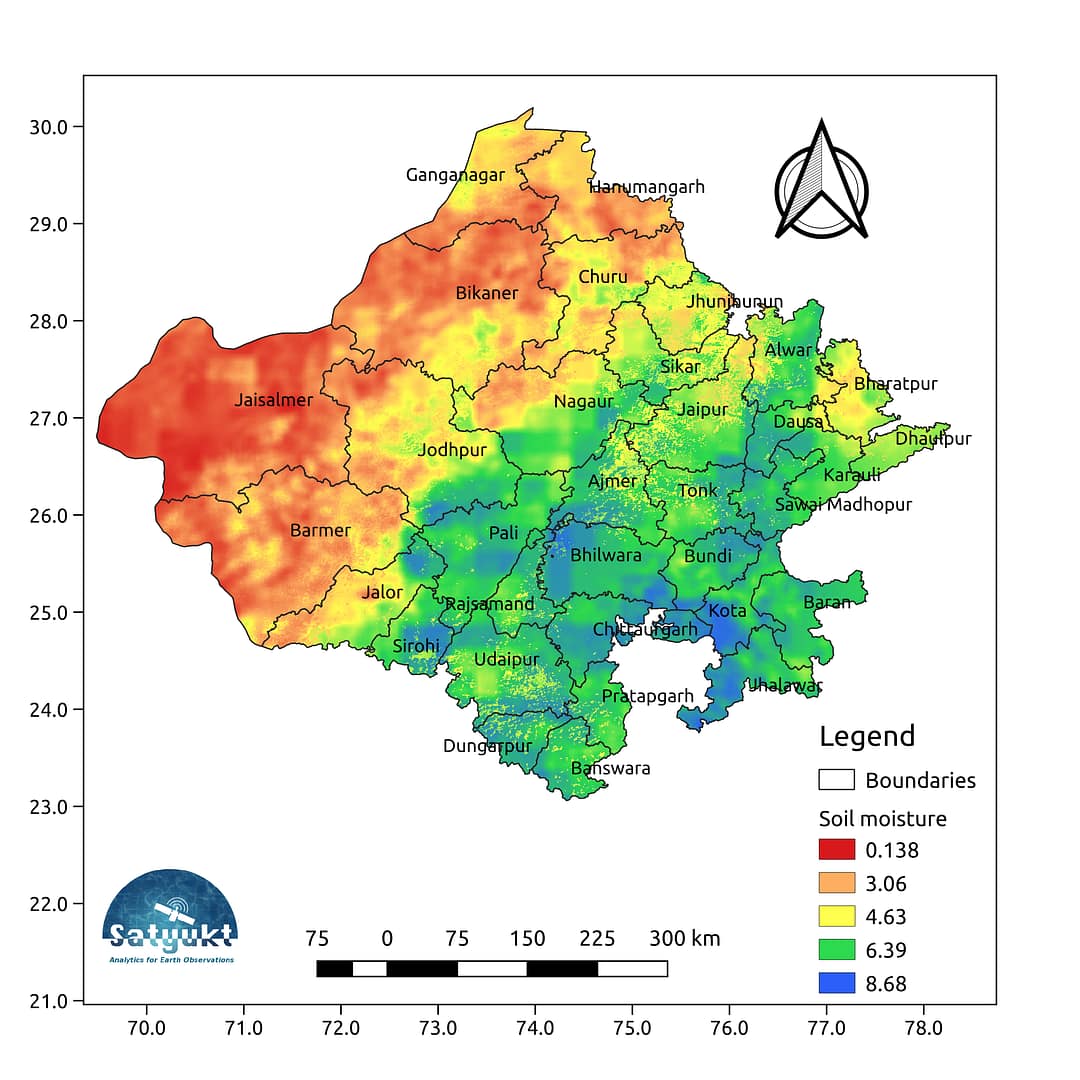
Rajasthan receives an annual rainfall less than 25 cm and hence the agriculture relies mostly on irrigation, which often becomes unprofitable. As water remains one of the limiting factors in the agriculture sector of the state, calculating irrigation requirement of the soil types spatiotemporally would be advantageous. Proper usage of water can increase the...

Agricultural production is subjected to many uncertainties. Hazards and unforeseen extreme climatic events increase the risk of agriculture production. Many risks directly affect farmers’ production decisions and welfare. Being an agrarian country, 48.9% of the Indian population directly or indirectly depends on agriculture (Economic Survey 2014-15). A total of 12,602 farming sector persons (8,007...

Accounting for about 70 percent of freshwater withdrawal, irrigation is probably the largest use of water globally. Unlike other uses, only half of the water used for irrigation is reusable. The remaining is lost by evaporation, evapotranspiration, or is lost in transit, by a leaking pipe. With an increasingly scarce water supply, irrigation management...

An aquifer is a water-bearing stratum that releases water in appreciable amounts. Wells are usually drilled into aquifers to fetch water. Aquifers are one of the most important sources of freshwater. Abstraction of groundwater through excessive pumping at a rate faster than it’s recharging rate will result in the overexploitation or persistent depletion of...

Residual crop burning has adverse effects on the quality of soil in the region and air, in and around, the region. Lack of adequate amount of laborers and time to prepare the fields for Rabi cultivation season are the primary reasons behind this widespread practice. Recent scientific studies have shown a rapid increase in...