Track your carbon footprint, for Thriving Fields and Sustainable Yields!!
Monitoring Carbon with Remote Sensing Technology
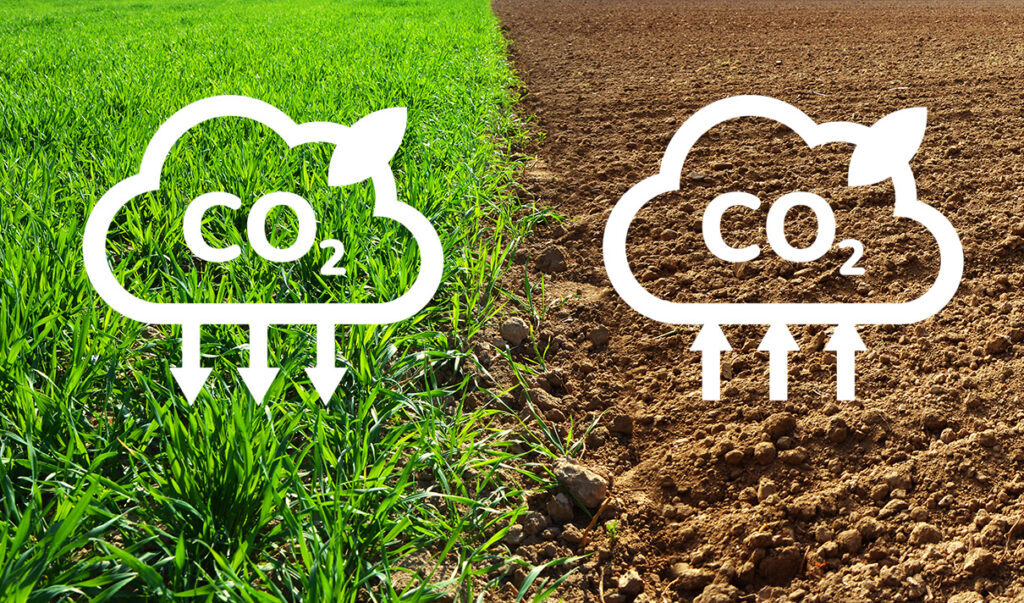
Soil organic carbon is a crucial component of soil health and plays a significant role in climate change mitigation as it helps to sequester carbon dioxide from the atmosphere. SOC sequestration monitoring or monitoring carbon is essential for evaluating the effectiveness of land management practices in enhancing carbon sequestration, improving soil health, and mitigating climate change. And it serves as a preliminary step toward carbon sequestration, transforming your soil into a carbon sink
Unlock the potential of sustainable land management with our innovative satellite-based remote sensing technology. At Satyukt, we specialize in providing comprehensive carbon monitoring services for agroforestry sites. Our advanced technology allows us to generate detailed carbon sequestration reports, offering invaluable insights into the environmental impact of your land.
Satyukt solution for monitoring carbon

Monitoring soil organic carbon levels is essential for understanding carbon cycling in terrestrial ecosystems. Our reports present a comprehensive overview of soil organic carbon levels in kg/ha over a specified period without involving any hassle of physical soil sample collection . This granular data empowers you to make informed decisions and implement targeted strategies for sustainable land management.

Monitoring the reduction in carbon di-oxide emission, greenhouse gas emission (GHG) and carbon footprint by establishing a baseline emission. Certainly, monitoring and assessing carbon footprint and greenhouse gas (GHG) emissions necessitates a comprehensive understanding of various factors influencing agricultural practices, including farming methods, irrigation techniques, soil management, and other related activities.
With our advanced soil monitoring satellite-based technology, corporations can not only efficiently meet their emission reduction goals but also empower farmers to optimize land management for increased productivity and ecological resilience

Our reports detail farm specifics, health via NDVI, water/soil practices, fertilizer and mechanization habits, plus harvest and burning insights.

A key advantage lies in reducing the necessity for physical site visits, streamlining processes, and ensuring a more resource-efficient approach to monitor carbon.

Satellites transcend geographical boundaries, allowing us to monitor emissions reduction in even the most remote locations.

Satellite solutions offer real-time monitoring, enhancing process efficiency. It's a cost-effective alternative to traditional methods, eliminating sampling errors and the delays associated with collecting soil samples, sending them to labs, and waiting for reports for weeks or months.
We employ satellite remote sensing technology to quantify carbon dioxide emission reduction, GHG emission reductions, and carbon sequestered in soil with precision. Our team of experts ensures that every ton of CO2 and GHG emission reduction and every kg/ha of carbon sequestered is based on reliable and verified data.
Monitoring soil organic carbon impacts
Monitoring soil organic carbon levels serves as an indicator of soil health. Increasing organic carbon content is associated with improved soil structure, water retention, nutrient availability, and microbial activity. This information helps farmers assess the success of regenerative practices in enhancing overall soil quality
Based on soil organic carbon levels, farmers can make informed decisions about the need for organic amendments like compost or manure. Adjusting the type and amount of amendments in response to monitoring data ensures that the soil receives the necessary nutrients and organic matter.
Declines in soil organic carbon can indicate soil degradation. Regular monitoring enables early detection of such changes, allowing us to take corrective actions promptly.